
Publishing Partner Red Flags: What to Watch for Before You Hand Over Your Manuscript
January 13, 2026
Finished Your Manuscript? Here’s What Comes Next (Most Authors Get This Wrong)
April 15, 2026From Idea to Published Book: What the Self-Publishing Journey Actually Looks Like

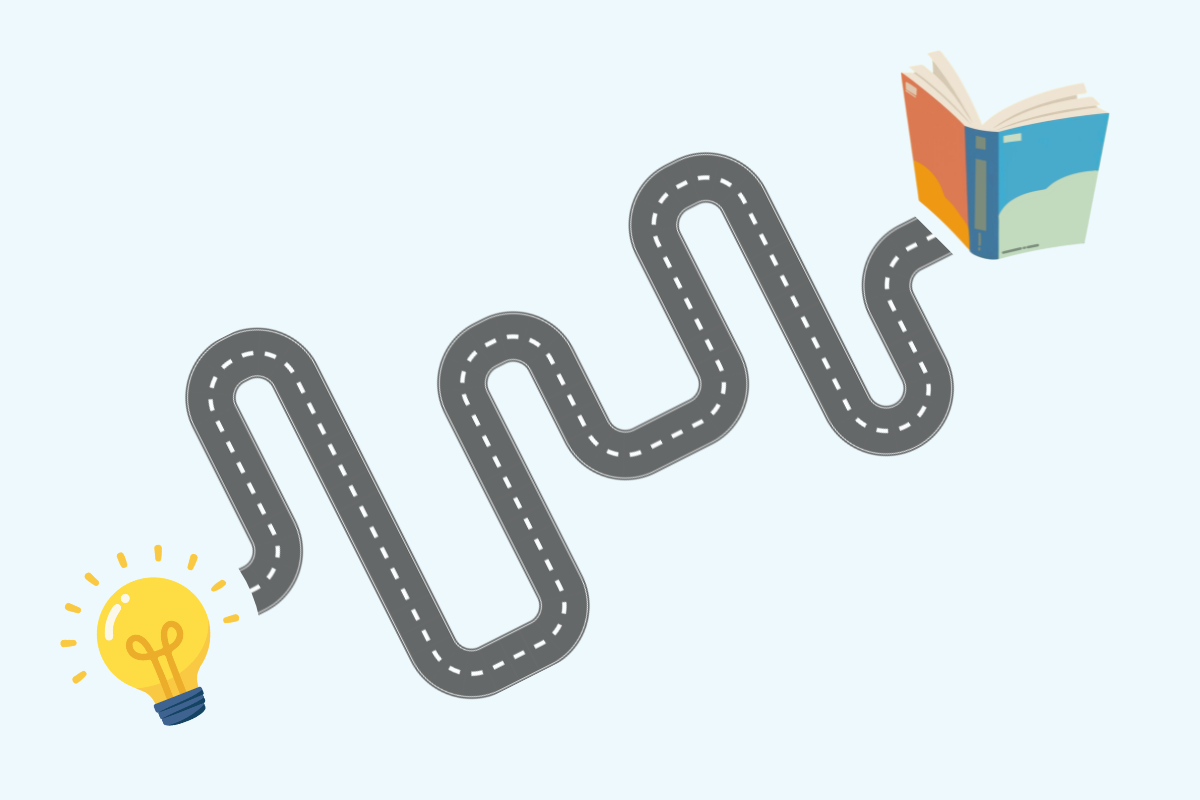
“If I can just finish writing my book, I’ll be done.”
It’s one of the most common—and understandable—assumptions new authors make. After all, writing a book feels like the biggest hurdle. It takes time, creativity, and serious commitment. So naturally, it must be the hardest part … right?
Not exactly.
The truth is, the self-publishing journey is far more than writing a manuscript. It’s a multi-stage process that includes planning, revising, refining, designing, and positioning your book for real readers. And for many authors, the biggest surprise isn’t how hard the writing process is—it’s how much work comes after it.
If you’ve ever felt overwhelmed by the idea of publishing your first book, you’re not alone. The process can feel unclear, fragmented, and full of conflicting advice.
This guide breaks it all down.
By the end, you’ll have a clear, realistic understanding of what the self-publishing process actually looks like. From your first idea to your book launch, you’ll learn exactly how to move through each stage with confidence.
The myth vs. reality of the self-publishing journey
Let’s start by clearing up a few common misconceptions.
Myth #1: Writing the book = publishing the book
Writing is just one phase of the publishing process. A crucial one, yes—but only the beginning.
Myth #2: You can publish quickly once the draft is done
In reality, quality books go through multiple rounds of editing, revisions, and preparation before they’re publication-ready.
Myth #3: You can do everything yourself
While self-publishing gives you control, it doesn’t eliminate the need for outside expertise. Professional editing, design, and formatting services exist for a reason.
The reality? The self-publishing journey is iterative, not linear. You’ll revisit your manuscript, refine your ideas, and make decisions at every stage. It’s not about rushing to the finish line—it’s about building a book that’s truly ready for the market.

Stage 1: Idea, planning, and positioning
Before you write a single word, your book needs direction.
This is the stage many authors skip—and it often leads to bigger problems later on in the publishing journey.
Start by asking:
- What is the purpose of your book? (Storytelling, education, authority-building?)
- Who is it for?
- What genre or category does it fit into?
- What do you want readers to walk away with?
From there, outline your structure. This doesn’t mean locking yourself into rigid rules, but it does mean creating a roadmap.
Strong books don’t start with writing—they start with clarity.
Skipping this step often leads to scattered drafts, unclear messaging, and major rewrites later. Taking the time to plan sets the foundation for everything that follows.
Stage 2: Writing the manuscript
Now comes the part most people imagine when they think about publishing: writing the book.
And yes, it’s challenging.
But here’s what many first-time authors don’t expect: Your first draft isn’t supposed to be perfect. In fact, it shouldn’t be.
Your goal is to get the ideas down, not to polish them.
Along the way, you may encounter:
- Inconsistent writing habits
- Self-doubt or imposter syndrome
- Creative burnout
- The temptation to endlessly edit as you go
All of this is normal.
The key is momentum. Progress matters more than perfection at this stage. You’re building the raw material that will later be shaped into a finished book.
Stage 3: Developmental editing and big-picture revisions
Once your draft is complete, the real transformation begins.
Developmental editing focuses on the big picture:
- Structure and organization
- Clarity of ideas or plot
- Pacing and flow
- Character or message development
This stage often involves significant revisions—and sometimes, rethinking entire sections of your book.
Many authors go through multiple rounds of revision here. That’s not a sign something is wrong—it’s a sign you’re on the right path.
This is where your manuscript evolves from a rough draft into a cohesive, compelling book.
Stage 4: Line editing, copyediting, and proofreading
After the big-picture work is done, it’s time to refine the details.
Each level of editing serves a different purpose:
- Line editing improves flow, tone, and readability
- Copyediting corrects grammar, punctuation, and consistency
- Proofreading catches final errors before publication
This stage is about precision.
It’s also where many authors realize that “good enough” writing doesn’t always translate to a seamless reading experience. Small issues like awkward phrasing, inconsistencies, or unclear sentences can pull readers out of the story or distract from the central message.
Polishing your manuscript ensures your ideas come through clearly and confidently.

Stage 5: Design, formatting, and production
You’ve written and refined your book. Now it needs to look the part.
First impressions matter—and in publishing, your cover is often the first thing readers see.
A strong cover design should:
- Align with your genre
- Capture attention
- Signal professionalism
Inside the book, formatting plays an equally important role. Clean, readable layouts help guide the reader through your content without distraction.
You’ll also decide on formats:
- eBook
- Audiobook
Presentation directly impacts credibility. Even a well-written book can struggle if it doesn’t look professional.
Stage 6: Publishing and distribution
Now you’re ready to publish, but this step involves more than just uploading a file.
You’ll need to:
- Choose a publishing platform (such as Amazon Kindle Direct Publishing)
- Input metadata (title, description, keywords, categories)
- Set pricing
- Upload your formatted files and cover
Before hitting “publish,” double-check everything. Small errors at this stage—typos in your description, incorrect formatting, or missing details—can affect your book’s performance.
Publishing is both a technical and strategic step. It’s when your book officially enters the market.
Stage 7: Launch and beyond
Here’s another major misconception: Publishing your book is the finish line.
In reality, it’s just the beginning.
Once your book is live, your focus shifts to visibility:
- Gathering reviews
- Promoting your book
- Engaging with readers
- Building your author platform
Books don’t sell themselves—especially in a crowded market.
A successful launch helps create initial momentum, but long-term success comes from consistent visibility and engagement. Your book becomes part of a larger journey, not a one-time event.
What most authors underestimate about the process
Even with a clear roadmap, there are a few things that still tend to surprise first-time authors.
- The time investment
Publishing a quality book takes longer than expected. From writing to final publication, the process can take months or years. - The emotional journey
There will be highs and lows. Excitement, frustration, doubt, pride—they’re all part of the experience. - The gap between “finished” and “publish-ready”
Completing a draft is a major milestone, but it’s not the end. The transformation into a polished, professional book takes additional work. - The value of professional support
Trying to manage everything alone can lead to burnout—or a final product that doesn’t meet your goals. Having expert guidance can streamline the process and elevate your results.
What to do next: Setting yourself up for success
If you’re just starting your self-publishing journey, here are a few ways to set yourself up for success:
Start with clarity, not just motivation
Define your purpose, audience, and goals before you begin writing.
Plan for editing early
Editing isn’t optional—it’s essential. Build time and budget for it into your plan.
Create a realistic timeline
Avoid rushing. Each stage deserves attention, and quality takes time.
Seek guidance when needed
You don’t have to figure everything out on your own. Support can make the process smoother, faster, and more effective.
The journey is worth it
The self-publishing journey isn’t a straight line and it’s not a quick sprint from idea to finished book.
It’s a layered, evolving process that transforms your initial concept into something real, refined, and ready for readers.
Yes, it takes time. Yes, it takes effort. But it’s also one of the most rewarding creative experiences you can undertake.
With the right roadmap—and the right support—you can move through each stage with clarity and confidence.
Because publishing a book isn’t just about finishing a manuscript. It’s about creating something that lasts.
Let’s build your book together
Looking to publish smarter, not harder? Partner with Elite Authors to navigate every stage of your self-publishing journey with confidence.